 Dallas Fort Worth Injury Lawyer Blog


Medically Reviewed & Written by Dr. Shezad Malik, M.D., J.D., Board-Certified Physician & Trial Attorney
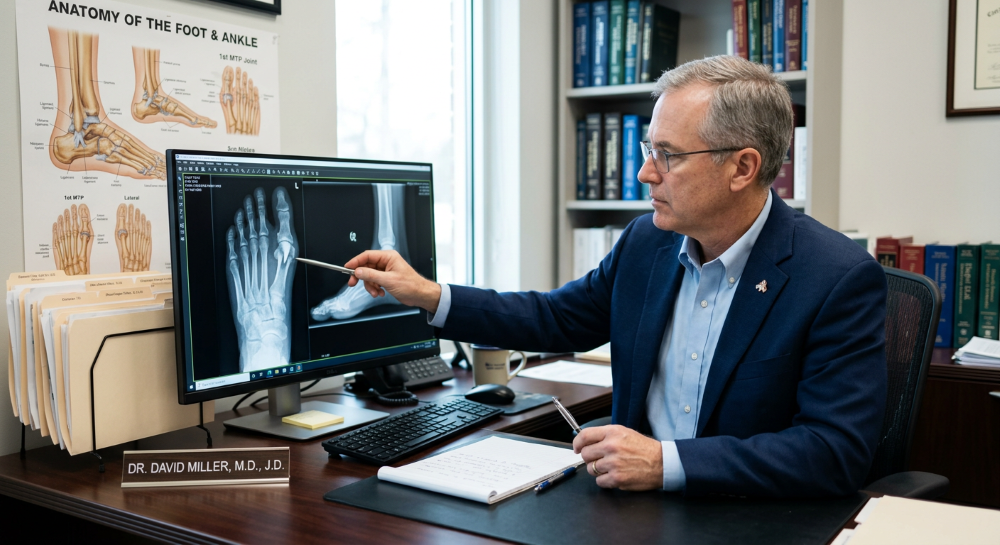
A medical‑legal expert reviews imaging showing complications linked to the Cartiva Synthetic Cartilage Implant.
The Cartiva Synthetic Cartilage Implant (SCI) made by Stryker, was introduced as a modern alternative to fusion surgery for hallux rigidus.
Marketed as a motion‑preserving solution, Cartiva promised faster recovery, reduced pain, and long‑term joint function.
However, thousands of patients across the United States have reported severe complications — including subsidence, bone loss, implant migration, and chronic pain — often requiring revision surgery or fusion.
If your Cartiva implant has failed, you may qualify for compensation through a Cartiva implant lawsuit or the active Cartiva MDL 3172.
Common Symptoms of Cartiva Implant Failure
Cartiva implant failure typically presents with one or more of the following symptoms:
- Increasing pain months or years after surgery
- Loss of joint stability
- Difficulty bearing weight
- Clicking or grinding sensations
- Reduced range of motion
- Swelling and inflammation
- Pain during push‑off while walking
- Radiographic evidence of subsidence or bone erosion
Many patients describe the pain as worse than before surgery, often leading to revision procedures such as:
- Implant removal
- Bone grafting
- Joint fusion (arthrodesis)
- Replacement with a metal or synthetic implant
Do You Qualify for a Cartiva Implant Lawsuit?
| Criteria | Status |
|---|---|
| Received a Cartiva Synthetic Cartilage Implant | ✓ |
| Experienced pain, subsidence, or bone loss | ✓ |
| Required revision surgery or fusion | ✓ |
| Implant placed between 2016–2024 (recall period) | ✓ |
| Symptoms unrelated to the implant | ✗ |
| No medical documentation of implant failure | ✗ |
Medical Evidence of Cartiva Implant Failure
Peer‑reviewed studies have documented multiple failure mechanisms:
- Subsidence — the implant sinks into surrounding bone
- Fragmentation — the hydrogel material breaks down
- Bone erosion — deterioration of the metatarsal head
- Inflammatory response — chronic swelling and pain
Key Medical References
- Journal of Foot & Ankle Surgery – Cartiva subsidence outcomes
- Foot & Ankle International – Revision surgery rates
- FDA Recall Database – Cartiva Class II recall (2024)
- Stryker Product Advisory – Distribution period affected
Current Court Status (2026 Update)
Cartiva MDL 3172 is active and centralized in Eastern District of Arkansas federal court.
Number of filed lawsuits: More than 2,400 Cartiva lawsuits have been filed nationwide, with hundreds more expected as patients undergo revision surgery.
Key allegations include:
- Defective design
- Premature failure
- Inadequate testing
- Misleading marketing
- Failure to warn surgeons and patients
Bellwether trials are expected to begin in late 2026.
Why Cartiva Implants Fail: A Deeper Medical‑Legal Analysis
The Cartiva Synthetic Cartilage Implant was designed as a cylindrical hydrogel plug intended to mimic the compressive properties of natural cartilage. In theory, the implant should cushion the first metatarsophalangeal (MTP) joint and preserve motion.
However, real‑world outcomes have shown that the implant behaves differently inside the human body than it did in laboratory testing.
One of the most significant failure mechanisms is subsidence, where the implant gradually sinks deeper into the metatarsal head.
This process can occur over months or years, often without immediate symptoms. As the implant sinks, it loses its ability to provide joint spacing, resulting in bone‑on‑bone contact, progressive pain, and joint instability.
Another major issue is hydrogel degradation. Although Cartiva was marketed as a durable, long‑lasting material, multiple studies have shown that the hydrogel can lose structural integrity over time.
Fragmentation or shrinkage of the implant can trigger inflammation, swelling, and worsening pain. In severe cases, the implant may migrate or rotate within the joint, causing mechanical symptoms such as clicking or grinding.
These complications often lead to bone erosion, where the metatarsal head deteriorates due to abnormal pressure and inflammation.
Bone loss makes revision surgery more complex, sometimes requiring bone grafting or complete joint fusion.
Many patients who undergo revision surgery report that the recovery is longer and more painful than the original Cartiva procedure.
Revision Surgery After Cartiva Failure
Revision surgery is one of the strongest indicators of Cartiva implant failure. When the implant no longer functions as intended, surgeons may recommend removal and replacement with another device or a fusion procedure.
Fusion eliminates joint motion entirely but can provide long‑term pain relief. However, fusion also limits footwear options and may alter gait mechanics.
Some patients undergo a two‑stage revision, especially when bone loss is severe. The first stage may involve removing the implant and placing a temporary spacer or graft.
The second stage may involve fusion or another reconstructive procedure. These surgeries carry additional risks, including infection, nerve damage, and prolonged rehabilitation.
From a legal standpoint, revision surgery is a critical factor in determining case value. Patients who require multiple surgeries often experience significant medical expenses, lost wages, and long‑term disability. These damages are central to Cartiva lawsuits and MDL claims.
How Cartiva Lawsuits Are Evaluated
Cartiva implant lawsuits focus on several core allegations. First, plaintiffs argue that the device was defectively designed because the hydrogel material was not suitable for long‑term load‑bearing use in the MTP joint.
Second, lawsuits claim that Cartiva and its manufacturer failed to conduct adequate clinical testing before marketing the device as a safe alternative to fusion.
Another major allegation involves failure to warn. Many surgeons were not informed of the true failure rates or the risk of subsidence, bone loss, and fragmentation.
Patients were often told that Cartiva would last indefinitely, even though internal data suggested otherwise. As a result, thousands of patients underwent surgery without understanding the potential long‑term risks.
In the MDL, cases are evaluated based on medical records, imaging studies, surgical reports, and revision outcomes.
Patients with documented subsidence, bone erosion, or implant fragmentation typically have stronger claims. Those who underwent revision surgery or fusion often qualify for higher compensation due to increased damages.
Long‑Term Impact of Cartiva Failure
Cartiva implant failure can have lifelong consequences. Chronic pain may limit mobility, reduce physical activity, and affect overall quality of life.
Some patients develop secondary conditions such as altered gait mechanics, knee pain, or hip pain due to compensation. Others struggle with footwear limitations or difficulty standing for long periods.
Psychologically, many patients experience frustration or anxiety after learning that their implant failed prematurely.
Revision surgery can be emotionally draining, especially when multiple procedures are required. These long‑term effects are considered when evaluating damages in Cartiva lawsuits.
Why You Should Act Now
Because Cartiva lawsuits are part of an active MDL, filing sooner rather than later is critical. Statutes of limitations vary by state, and waiting too long may bar your claim entirely. Additionally, early filers may benefit from stronger positioning within the MDL as bellwether trials approach.
If you suspect your Cartiva implant has failed, obtaining medical imaging and a legal evaluation is essential. A physician‑attorney can review your symptoms, imaging, and surgical history to determine whether you qualify for compensation.
Statute of Limitations
Every state enforces strict deadlines for filing a Cartiva lawsuit.
- Texas: 2 years (Discovery Rule applies)
- California: 2 years
- Florida: 4 years
- New York: 3 years
- Illinois: 2 years
If your implant failed, do not wait — your deadline may already be running.
Medico‑Legal Disclaimer
This article provides general medical‑legal information and is not a substitute for professional medical advice or individualized legal counsel. Always consult a licensed physician for medical evaluation and a qualified attorney for legal guidance specific to your case.
Free Cartiva Case Review
If your Cartiva implant failed, you may qualify for compensation.
Call now: 214‑390‑3189
Or visit: Cartiva Implant Lawsuit Page
Don’t Wait — Legal Deadlines Are Strict
Call Dr. Shezad Malik Law Firm and speak to a physician‑attorney today.
Call: 214‑390‑3189
About the Author
Shezad Malik, MD JD is a board‑certified physician and trial attorney focusing on defective medical devices and pharmaceutical product liability. He provides medical‑legal analysis of Cartiva implant failure, subsidence, bone loss, and revision surgery.
He represents patients nationwide in Cartiva implant lawsuits, including MDL 3172 and individual claims. Learn more at dallasfortworthinjurylawyer.com.
Dupixent Lymphoma Lawsuit: Claims, Risks & Financial Compensation Options